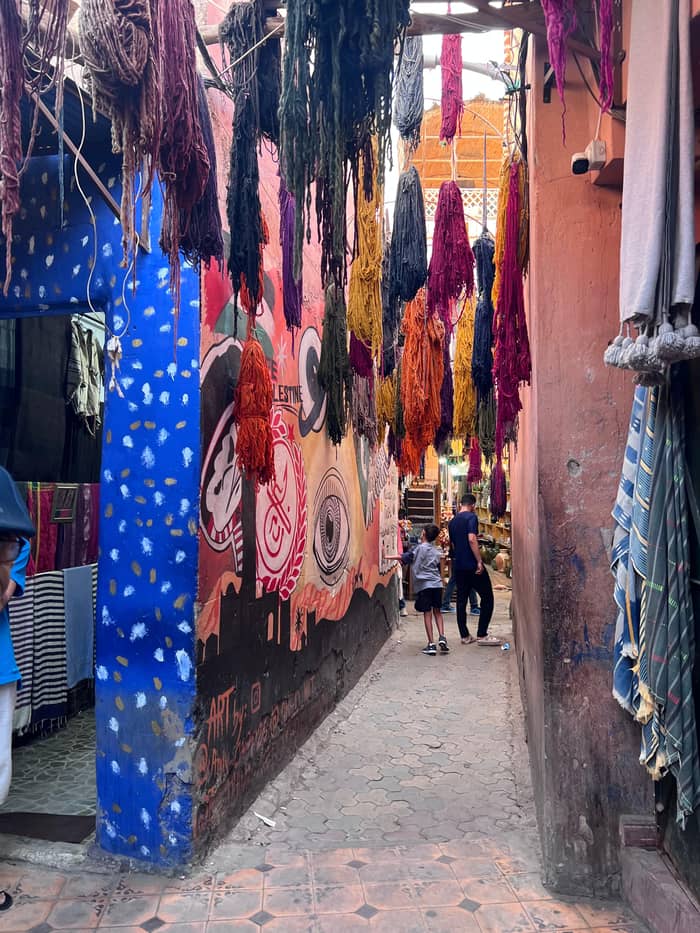
Souks walk
Colorful souks walk
The lanes for 3 hours
- Length3 hours
- Souk Semmarine30 minutes
- Pricefrom $25
Tick-off checklist
Marrakech medina walk with a guide
★ 4.7 · 7,084 guest ratings
Brief answer
A Marrakech souks and medina tour works best when you shop by trade, compare several stalls, keep small cash ready and bargain in a calm, friendly way.
Souk essentials
Things to do · 12 items
Mark items as done. Your progress is saved on this device only.
0 / 12 ready
All set. Only your date and your meeting point are left to choose.
Secure your spotThe souks sorted by trade, the crafts worth carrying home, a polite method for bargaining that needs no price list, and what a guide changes when you shop.
Editorial team, marrakechmedinatour.click · Updated November 23, 2026 · ~7 min read
In brief
Before you plan a Marrakech souks and medina tour, learn how the market is organized: every trade has its own lane. The regional tourism council starts at Souk Semmarine, the beating heart of the souks, where rugs, textiles and handcrafted items spill across the lane.1 Nearby it names Rahba Quedima and Souk Lghzal as the next places to explore.11 Everything else branches from there, and the lanes narrow and darken as you leave the main spine.
The council then walks through the specialties. Souk Zrabi is given to pottery, Souk Sebbaghine is dedicated to tanners, Souk el Attarine is the space for spices and perfumes, and Souk Smata shows craftsmanship through its colorful slippers.2,3,4,5 There is also a Jewelers Souk, and the Souk el Kebir and the Souk Cherratin are given to leather goods.12,13 A shopper with a short list can aim for the right lane instead of walking every one.
UNESCO counts souks, fondouks and artisanal activities among the features of the medina's living fabric.14 The trades cluster because the buyers and the workshops grew up together over centuries. For you, that means a practical rule: if you want leather, go to the leather lanes, and compare in several shops before you commit, because each lane offers the same type of goods at different levels of quality.
By trade
| Souk | What it is known for | Source note |
|---|---|---|
| Souk Semmarine | Rugs, textiles, handcrafts | Called the beating heart.1 |
| Souk Zrabi | Pottery | Given to the art of pottery.2 |
| Souk Sebbaghine | Tanners | Dedicated to tanners.3 |
| Souk el Attarine | Spices and perfumes | A space for aromas.4 |
| Souk Smata | Colorful slippers | Craftsmanship in babouches.5 |
| Souk el Kebir and Cherratin | Leather goods | Bags and leather work.13 |
| Jewelers Souk | Jewelry | Called a sparkling paradise.12 |
Souk names and trades come from the regional tourism council; the lanes are close together, so ask a shopkeeper for the nearest of each.1
Start with leather, since the national tourism office pairs Marrakech with leather the way it pairs Ouarzazate with carpets and Safi, Fez and Zagora with clay.6 Babouche slippers are a classic purchase, and the council says Souk Smata reveals Moroccan craftsmanship through them.5 Check the stitching and the sole, flex the leather, and ask how it was tanned. A good pair is soft at the heel and firm under the arch, and the price should follow the quality you can feel.
For the home, the same office points to Marrakech, Fez and Safi for wrought iron, naming candelabras, lanterns, mirrors and lampshades.7 Zellige tiles with intricate shapes cover the walls and floors of riads, it says,8 and copperware is in common use in Fez, Marrakech and Tetouan.9 Metal lanterns and tiles are heavy, so ask about shipping before you buy something you cannot carry, and keep the receipt and the shop's address.
Rugs and jewelry need the most care. The national tourism office says rugs are traditionally handmade mostly by women using knotting techniques from Amazigh culture,10 and that most of the jewelry shops of the region are in the medina next to Jemaa el-Fna.15 Both are categories where quality varies widely and a guide's eye is worth something. Ask to see the back of a rug, how it is knotted, and whether a piece of jewelry is silver or plated, and walk on if the answers are vague.
Time in the lanes
Stop times as the listing states them: 10, 20, 30, 15, 20 and 30 minutes over a 3-hour walk.
No official price list exists for souk goods, and none is invented here. What exists is a method, and it works in any lane. Decide beforehand what the item is worth to you, not what you think a local would pay. Greet the seller, take your time looking, and ask the price only when you actually want the thing. A seller who sees real interest will engage, and one who sees a hurried tourist will quote the highest number he can hold.
Make the first counter offer low enough to leave room but high enough to be taken seriously, and then move in small steps. Keep your tone friendly, and treat the exchange as a conversation, not a contest. Tea may be offered; accepting it is polite, and it does not oblige you to buy. If the price cannot reach your number, say thanks and begin to leave. Often the seller calls you back with a better figure, and if he does not, there are plenty of other stalls.
A useful habit is to compare before you commit. Visit several shops for the same type of item, note what each asks and what each shows, and only then return to the shop that offered a good piece at a fair figure. Pay in cash, with small notes ready, because a note too large invites rounding up. Never accept a price that makes you uncomfortable, and never feel pressured to buy because you were guided into a shop.
Pick your souk plan
Say what you want and the matching route appears.
If I have a list to buy
Guided shopping tour
It is built around a local guide for buying.
If I want to see the lanes
Colorful souks walk
It allots 30 minutes to Souk Semmarine and 20 to Souk Cherifia.
If I want monuments and a few shops
Mixed walk
It combines the Ben Youssef Madrasa with Souk Semmarine.
If I want to watch leather made
Bab Debbagh side
Raw hides arrive at its tannery.16
If I want to browse alone
Souk Semmarine
The council calls it the beating heart of the souks.1
Pick a souk walk
Souks walk
The lanes for 3 hours
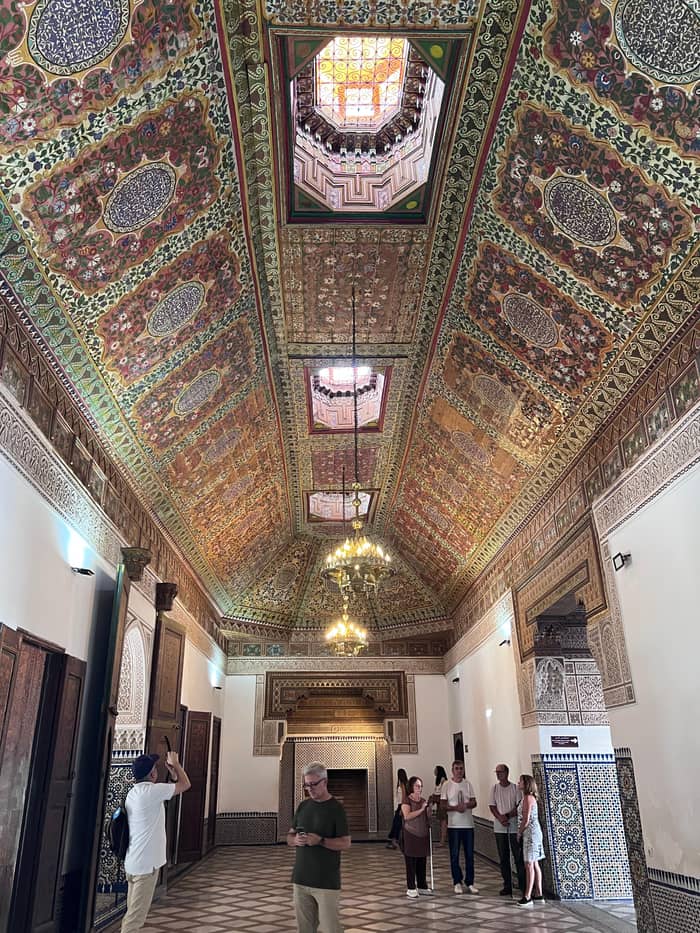
Shopping tour
Buying with a local guide
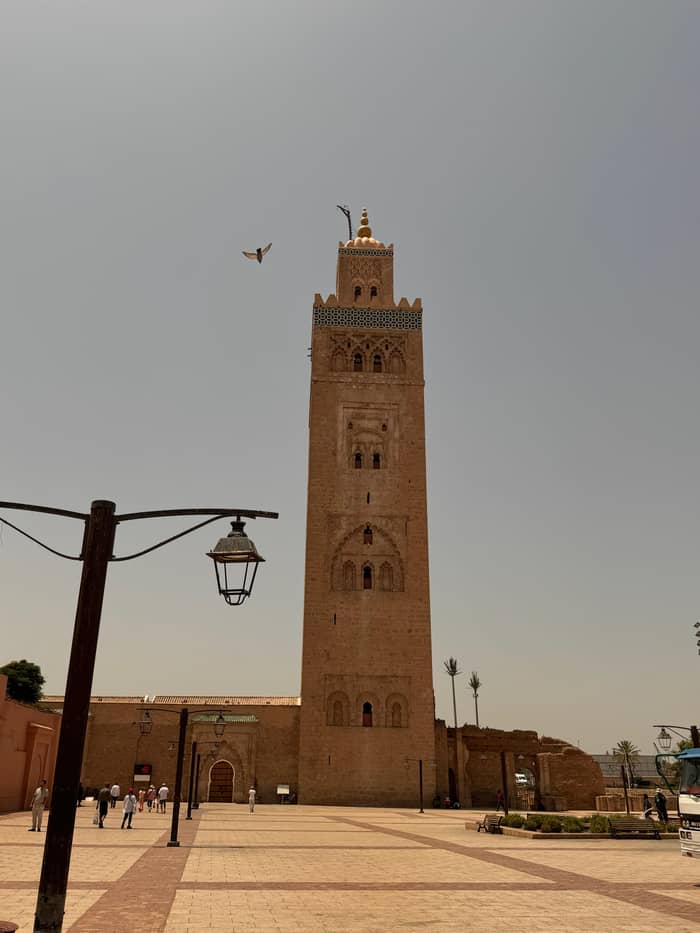
Mixed walk
Ben Youssef plus Semmarine
Shopping is more interesting when you see where goods come from. The council explains that a fondouk was an old caravanserai or inn that accommodated travelers and their animals and stored their goods during trading journeys.17 Many have been restored and now hold shops, galleries or restaurants around an inner courtyard. They are the buildings that made the souks possible, and walking into one tells you how the trade worked.
The most famous fondouk, according to the council, is the Fondouk El Nejjarine, now home to a museum of wood and leather crafts.18 A visit there is a good way to learn what fine woodwork and leather look like before you meet the market versions. The council also sketches a tanners' trail that follows raw hides arriving at the Bab Debbagh tannery, being sold at Souk Ejjeld and being transformed into finished products.16
Crafts also keep the monuments standing. UNESCO notes that restoration with traditional materials has revived the building trades, from zellige and painted and sculpted wood to plastering and wrought ironwork.19 When you buy a handmade lantern or tile, you are paying for the same skills, so a fair price is not an insult to the seller but a support for the work. Ask where the piece was made and by whom, and note whether the answer sounds specific or rehearsed.
Compare the walks
Type in how many are coming and weigh the guided walks against each other.
Look at 3 options
Type in how many are coming and weigh the guided walks against each other.
≈
View≈
View≈
ViewStarting prices as on the booking platform, converted at the ECB reference rate. You see the exact price at booking.
A bargain in steps
Look
Greet the seller and look at several pieces before you ask about any price.
Ask
Ask only for what you actually want, and note the figure without reacting.
Counter
Start below your limit and move up in small steps, keeping the tone friendly.
Decide
If the figure does not suit, thank the seller and leave; you can always return.
Pay
Hand over small notes, take the item and keep the shop's address.
A guide does a few useful things in the souks: finds the right lane, interprets what you see, and takes the pressure off. The Marrakech colorful medina souks guided walking tour lasts 3 hours, with Cafe de France for 10 minutes, Jemaa el Fnaa for 20, Souk Semmarine for 30, Rahba Kedima for 15, Souk Cherifia for 20 and the medina for 30, guided in Arabic, French, German, English or Italian. It is from $25. That is a walk of the souks themselves, not a monuments tour with a souk at the end.
A guided shopping tour is the version built around buying. The listing is a 3-hour guided souk shopping tour with a local guide, in English and Italian, wheelchair accessible, from $28. It suits a visitor with a list who wants help reading prices and quality. Before you book, ask whether the route includes shop stops and whether you are under any obligation, because the point of a guide is to widen your options, not to narrow them.
The notes of one walking tour advise bringing water, sun protection and small change for personal purchases, and add that a short stop at a local artisan workshop can be arranged on request. That request is worth making: watching a leather worker or a metalworker for a few minutes changes how you judge the finished piece. Ask your guide to explain at least one process and to say plainly which shops pay commission, if any, so that you can take it into account.
Video
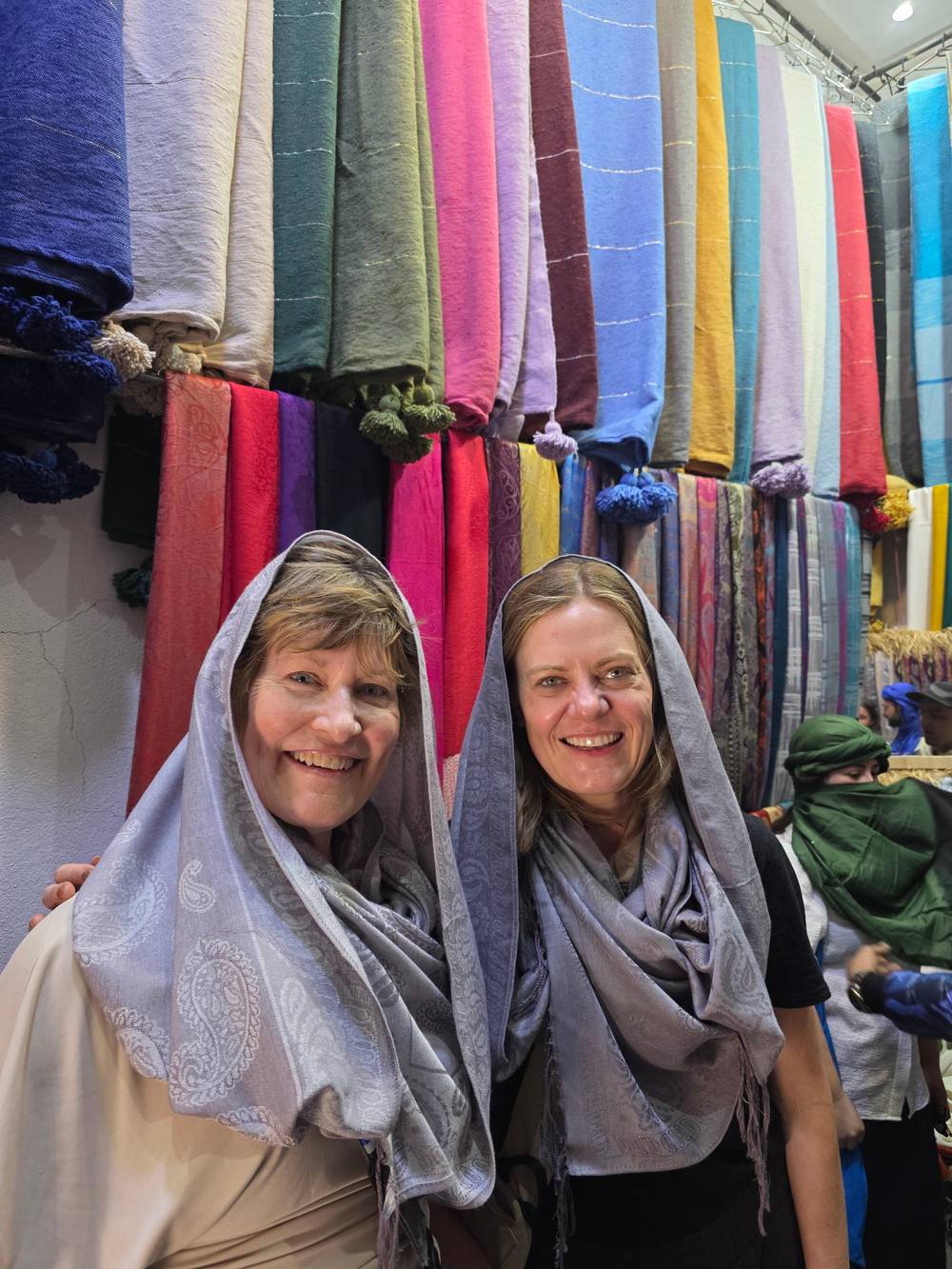
Destinations Morocco on YouTube · Video data is requested only when you tap play.
In Marrakech, Fez or Safi, you come across icons of Moroccan wrought iron work. Candelabras, lanterns, mirrors or lampshades will perfectly fit into your interiors.
The walk sold here is a monuments walk that ends in the lanes, not a souk tour. It runs for 4 hours, and its last stop gives the medina 40 minutes, which is where you meet the souks. That makes it a good first look, and a good way to decide whether you want a dedicated souk walk on another day. If shopping is your main goal, a Marrakech souk walking tour with more time in the lanes is the better fit.
A 3-hour Ben Youssef and Secret Garden walk spends 30 minutes in Souk Semmarine and 30 in the medina lanes, while the 3.5 to 4 hour version gives Semmarine 30 minutes and the lanes 40. These blends suit visitors who want a few shops between monuments. Choose by the stop list: a souk walk lingers in the lanes, a monuments walk passes through them on the way to the next door, and either guide can adjust the order if you tell them your priorities.
On the day, keep your plans light. Start in the morning, when the lanes are calmer and the seller's patience is fresher, carry only the cash you intend to spend, and keep valuables where your hand can always find them. Take a break at a cafe on the square when the lanes become overwhelming. A souk is best taken in short bursts, and a trip that feels like a game with a friendly opponent is a trip that works.
FAQ
The regional tourism council calls it the beating heart of the souks.1
The council names the Souk el Kebir and the Souk Cherratin for leather goods.13
The council says it is the space for spices and perfumes.4
The council describes raw hides arriving at the Bab Debbagh tannery.16
The colorful souks walk lasts 3 hours, from $25.
One walking tour advises small change for personal purchases.
The 3-hour guided souk shopping tour is listed as wheelchair accessible.
The council says fondouks housed travelers, their animals and their goods.17
Sources
Walking the Marrakech medina? A real person answers here.